Author

Chris Ming

Browsing

I saved the empty liquor bottles and filled them with water.

When the restaurant was quiet (we opened winter of ’08), the start of the Recession — it was quiet often) I took the rail liquors out. Placed them on the ground. Replaced them with the dummy bottles.

Then I practiced making cocktails. Over and over again. For hours, six days a week. That first week, I only made 4 cocktails, our most popular ones (Raspberry Saketini (it was a Japanese restaurant), Dirty Martini (for Tom, that’s all he drank), Cosmo, Mai Tai).

I learned with the jigger pour first, then free pour, measuring my portions against the jigger pours, testing my accuracy.

We kept a bartender’s book behind the bar. I don’t know who brought it, Jason maybe, our first bartender. Tall, lanky, a junkie. He made it through training but no-showed on the second day and no one saw him again. I started with the simple stuff, two-ingredient mixes college students and alcoholics drank to mask the taste of cheap liquor: Screwdriver, Cape Codder, Greyhound.

Then I learned the drinks I’ve heard from movies or weddings: Sex on the Beach, Tequila Sunrise, Sea breeze, Madras, White Russian.

Everyday. When there weren’t napkins to fold or salads to prep, I stood at the bar and poured water. Every step of the dance, from pulling printer tape and slapping it on the rail, icing glasses, different combinations of drinks. I wanted muscle memory, not knowledge.

That’s how I taught myself to bartend.

How I Learned About Hollywood

In 2010, I moved to Los Angeles to work in Hollywood. At my first internship interview, the assistant, Jeanie Wong, asked me how my coverage was. Great, I lied. I went home and my roommate showed me what coverage was.


 

I was talking to Brian Balfour about retention and engagement, and asked him this question:

[blockquote]“Should you try to retain people at the onboarding phase, or try to resurrect people who have churned and are now dormant?”[/blockquote]

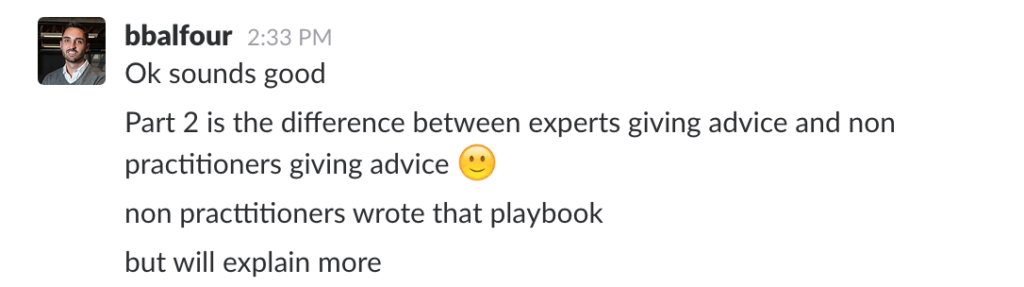
You see, I’ve heard arguments for both sides, but when I told Brian this, here’s his response:

practitioners vs. non-practitioners

Later he explained:

“A non-practitioner will make all sorts of arguments as to why it’s better to resurrect churned users (they’re already exposed, it’s cheaper, it’s a large audience, etc.). But a practitioner knows from experience it’s always more valuable to focus on new or current users.”


I just finished my second week at Reforge and if I had to sum up the week, it’s this:

I’m learning a new language — and it’s hard.

Reforge teaches growth professionals how to advance their skills in growth through online education, networking and mentorship. The students are 3 years into their career at companies like Facebook, Google, Dropbox, LinkedIn, etc. aka some damn smart people.

And after 5 minutes of talking with them, I realize I don’t have the vocabulary (yet) to talk through the ideas and concepts I’ll eventually teach, things like growth models, churn, and viral loops, just to scratch the surface. 90% of the time I’m just a smiling sponge in my chair, trying to absorb as much as I can.

That’s just part of the game. At I Will Teach, we called this “starting with a child’s mind.” The better you are at that, the easier everything else gets.

Fortunately, I’ve done my fair share of starting with a child’s mind. Years ago I moved to Los Angeles, with no idea that Hollywood had a its own language and cadence. I learned it slowly and painfully from scratch.


Last week I learned some interesting things about SF tech culture. For example:

  • Investing in cryptocurrencies is a thing
  • People invest hundreds, even thousands of dollars in “coffee set-ups” — home coffee brewing equipment to make their own personal perfect cup of coffee
  • Everyone loves wearing Patagonia

San Francisco Patagonia Jackets

But the biggest mental shifts I’ve had to make is about money. Here are 2 ideas about money I’m trying to hold simultaneously in my mind:

Before going to Taiwan, my friend prepared a document of recommendations. She wrote:

“Soup Dumplings: Din Tai Fung is big in Taiwan, but I say it’s overrated. A soup dumpling is a soup dumpling, and we get great ones stateside.”

We went to Din Tai Fung, and I couldn’t disagree more. The hype is well-deserved. This was probably my favorite meal (out of many good meals) in Taiwan. Of course, it wasn’t just about the soup dumplings — which were good.

Here are some other things I loved about our meal at Din Tai Fung.