Author

Chris Ming

Browsing

I finished Dennis Lehane’s MOONLIGHT MILE recently. It’s disheartening to say, but I felt he didn’t bring his A-game on this one. It was as if he tried so hard to be relevant, to cover every iota of modern day society, from adoption to Twitter to unemployment, that he lost sight of the razor sharp characterizations that made Patrick and Angie novels so enticing.

I can’t say I’m the foremost expert on Dennis’s writings, though I’d like to think I’m in a pretty good position to comment on his work — at least in the top 5 percentile of “critics who should keep their opinions to themselves but can’t help sharing anyway.”

Having read LIVE BY NIGHT, THE GIVEN DAY, DARKNESS TAKE MY HAND, and A DRINK BEFORE THE WAR, I’m slowly working through his body of work in the novel form.

But I’ve readhis short story, ANIMAL RESCUE. The film adaptation which recently wrapped production in Brooklyn, starring Tom Hardy and Noomi Rapace. I’ve also read every draft of the screenplay.

THE CONSUMERS, another Lehane short, I’ve read. I also read the treatment that Dennis allowed a young, up-and-coming writer to write. I read another person’s script adaptation of another short story, RUNNING OUT OF DOG.

I’ve read the spec pilot for MOONLIGHT MILE, which he co-wrote. I’ve read his proposals, when his ideas are still raw and incubating, and watched them not so much as grow into treatments and scripts, but explode off the page like a hormonal teenager on the brink of puberty. I’ve read Dennis at every stage, which is why I can respectfully say, this wasn’t his best.

So what’s the takeaway?

That LIVE BY NIGHT, which is probably one of his best works, he wrote after MOONLIGHT MILE. The point is it doesn’t matter what you created yesterday, what you create today is how you’re be measured. Every new project is your opportunity to find your A-game.

My notes on the book below after the hashtags, which mostly consist of choice language that Dennis used, but first, a quick plug for piece of audio I’ve been listening to, Bryan Elliott’s interview with Seth Godin and their discussion of Seth’s new book, ICARUS DECEPTION. As with most of Seth’s material, if you’re an artist, you should check it out:

“Hey, Patrick.” The breeze was sharper up top and she dealt with it by burrowing into a flimsy jean jacket, the collar pulled up to her earlobes.

“You look good,” she said.

“You, too.”

“It’s nice of you to lie,” she said.

“I wasn’t,” I lied.

The lines in her face were deep enough to hide gravel in. She had the air of someone clinging to a wall of soap

Monument High was the kind of school where kids studied math by counting their shell casings.

Beatrice watched them go and their happiness shrank her. She looked light enough for the breeze to toss her down the stairs.

I exited South Station and shook my arms and legs… I walked over to Two Interantional place, a skyscraper as sleek and heartless as an ice pick. Here, on the twenty-eighth floor, sat the officesof Duhamel-Standiford Global.

DS didn’t’ tweet. They didn’t have a blog or pop up on the right side of a Google screen when someone typed in “private investigation greater Boston.” Not to be found in the Yellow Pages, on the back of Security and You magazine, or begging for your business at two AM between commercials for Thighmaster 6000 and 888-GalPals. Most of the city had never heard of them. Their advertising budget amounted to the same number every quarter: 0.

And they’d been in business for 170 years.

They occupied half of the 28th floor of Two International. The windos facing east overlooked the harbor. Those facing north peered down on the city.

After I was buzzed through that door, I entered a wide anteroom with ice-white walls. The only things hanging… frost glass… it made you want to put on your coat.

Behind the sole desk in the vast anteroom sat a man who’d outlived everyone who could remember at time he hadn’t sat there

He buzzed me through the next set of doors. Dove-gray carpet.

Dent carried whatever had chased him out of the service like a nail in the back of his neck.

“I’ll kill you just for being short,” Bubba said.

While I’d slept, someone had seeded the folds of my brain with red pepper and glass.

She nodded. It was barely a question, really. Angie could tell Bubba she needed him yesterday in Kathmandu and he’d remind her that he was already there.

I flicked the dead cigarette butt from the center of my palm as Violeta Borzakov said, “Kirill, you’re blocking the TV.”

Photos Credit: ALA The American Library Association

As I mentioned, I’ve been reading Sheryl Sandberg’s LEAN IN. There are parts that feel too much like a gender studies class (though, what did I expect?) but there are more than plenty of insights into the mind of Facebook’s COO for us to apply at work and at home. This is doubly true if both partners in a relationship (I hate to use the phrase, “Type-A”) have ambitious career trajectories.

My highlights below, with my notes in italics.

We hold ourselves back in ways both big and small, by lacking self-confidence, by not raising our hands, and by pulling back when we should be leaning in.

*how many times in a pitch, or in talking to someone, did I feel this way? The moment I felt like I may be imposing, I pulled back. Lean in more.

I rarely heard anything, however, about the ways I might hold myself back. These internal obstacles deserve a lot more attention.

*her message is: work on yourself, too. It’s not just the institution. Work on what you can control and it’ll reflect in the world around you. Similar to what Ramit says about getting a job — don’t focus on the state of the economy. Focus on how you can have good skills and can convey your value.

I do not believe that there is one definition of success or happiness. Not all women want career. Not all women want children. Not all women want both.

*After discussion with Amy: having an equal 50-50 split on household chores or whatever, isn’t what’s important. Instead, focus on having a common goal. Working towards a common purpose and both people having a clear understanding what that is and working towards. Also, respect and gratitude for the work that the other person does.

I have heard these criticisms in the past and I know that I will hear them — and others — in the future. My hope is that my message will be judged on its merits. We can’t avoid this conversation. This issue transcends all of us.

*On dealing with criticism. You will deal with it, because your message will not resonate with everyone. But you can only hope that the message will be judged on its merits, no more no less.

By the age of twenty-five, I had managed to get married… and also divorced. At the time, this felt like a massive personal and public failure. For many years, I del that no matter what I accomplished professionally, it paled in comparison to the scarlet letter D stitched on my chest.

*She suffered this major personal failure (in her eyes) at such an early age, yet she learned to overcome it.

pg. 46 “Damn it, Sheryl! Why are you going to make less than any man would make to do the same job?”

On how Sheryl wrapped her head around the idea that she needed to negotiate against Zuckerberg during her FB negotiations.

pg. 51 Mark and I sat down for my first formal review. One of the things he told me was that my desire to be liked by everyone would old me back. He said that when you want to change things, you can’t please everyone. If you do please everyone, you aren’t making enough progress. Mark was right.

pg. 54 Sheryl discusses her career trajectory which is pretty interesting

pg. 58 Eric Schmidt covered my spreadsheet with his hand and told me not to be an idiot. Then he explained that only one criterion mattered when picking a job — fast growth. When companies grow quickly, there are more things to do than there are people to do them. When companies grow slowly or stop growing, there is less to do and too many people to not be doing them.

First and most important, I set targets for what my team can accomplish. Second, I try to set more personal goals for learning new skills in the next eighteen months. It’s often painful, but I ask myself, “How can I improve?”

Oprah Winfrey once explained, “I mentor when I see something and say, ‘I want to see that grow.'”

The men were focusing on how to manage a business, and the women were focusing on how to manage a career.

We need to stop telling them, “Get a mentor and you will excel.” Instead, we need to tell them, “Excel and you will get a mentor.”

Every so often, Clara Sihih would contact me, always with an interesting point or a thoughtful question. She never asked to get together to “catch up.”

Josh Steiner told me to figure out what I wanted to do before I went to see the people who had the ability to hire me. That way I wouldn’t waste my one shot seeking general guidance, but would be able to discuss specific opportunities that they could offer.

pg. 77 On communication

Molly Graham’s approach: Molly joined FB in 2008 and held a number of jobs throughout the company in communications, human resources, and mobile products. She performed extraordinarily well in all of these very different trolls because she is always learning… I praised her effort. She paused and said, “Thanks, but you must have ideas for me on what more I could have done.”

“How can I do better?”

“What am I doing that I don’t know?”

“What am I not doing that I don’t see?”

I understand how easy it is tostop asking yourself this question. You get frustrated with your bosses and your work.

Which is why if you’re even doing this just once a month, for the rest of your career, how much more of an impact will you have over the next person?

pg. 99 Leaving work force statistics

pg. 105 “How is Dave? Is he okay with, you know, all your [whispering] success?”

pg. 126 “up until the day they left, they did everything McKinsey asked of them before deciding that it was too much. Larry implored us to exert more control over our careers. He said McKinsey would never stop making demands on our time, so it was up to us to decide what we were willing to do. It was our responsibility to draw the line.”

pg. 131, General Colin Powell “rejects busy bastards… In every senior job I’ve had I’ve tried to create an environment of professionalism and the very highest standards. When it was necessary to get a job done, I expected my subordinates to work around the clock. When that was not necessary, I wanted them to work normal hours, go home at a decent time, play with the kids… I am paying them for the quality of their work, not for the hours they work.

pg. 134 Stay-at-home Mom statistics. In 1975 SaH Mom spent 11 hours / week with kids. Today, a working mother spends that much time, and a SaH spends 18 hours with kids / week.

pg. 146 Inside FB, few people noticed my TEDTalk, and those who did responded positively. But outside of FB, the criticism started to roll in. ‘Why are you giving more speeches on women’s issues than on FB?’ ‘This is your thing now?’
If you do anything different, criticism will roll in. Accept that idea now. Just accept that the criticism is going to come in, so that you can go back to doing important work.

Photo Credit: Dan Farber

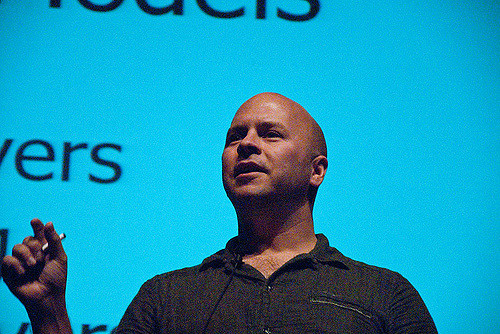
This week we’re listening to a great interview, conducted by Ramit Sethi of I Will Teach You to be Rich, of Derek Sivers, the creator of CDbaby. Derek also blogs here.

The first time listening to this interview, my girlfriend and I were driving to Chatsworth for a lunch (yes, that’s correct — instead of a long, meaningful conversation, we hooked up the iPod and got our learn on. That’s true love.) and we followed Derek’s story of the creation and eventual sale of CDBaby on a beautiful Sunday drive, catching the sun at it’s peak as we came down the hill in Chatsworth.

If I had to sum themajor takeaway of the 1-hour interview, it’s with Derek’s one-line: “the standard is for chumps.” Derek illustrates the point far more eloquently with his example of crash course music school (cramming two years of music school into six weeks before he went to Berklee) but what he’s saying is that you don’t have to accept the pace determined for you by others. You don’t have to play by all the same rules. If you want to do something, you have to make it happen for yourself. And if they don’t let you, well, you should change it.

Click here to download the video

The link takes you to Ramit Sethi’s earn1k private list, which if you’re not on, I highly recommend you join, because he puts up such awesome free material, it’s ridicccculous. After you’ve downloaded, listened, maybe checked out Ramit’s I Will Teach You To Be Rich site or Derek Siver’s blog, come back here for other takeaways from this interview:

Takeaways:

08:12 – He lays out his dream scenario for CDBaby, which he broke down to four qualities: 1. get paid every week, 2. full name and address of everyone who buys the music, 3. never get kicked out because you don’t sell enough, 4. no paid placement. Whenever we start a project, do we think about “man, these are the core ideals that I want to hold onto?”

Not that you’ll have to hold onto them forever, or that they won’t change as the business or market changes. But it’s important to recognize what you’re striving for, even if you delineate from that original vision.

16:22 – After putting ~10 years into CDBaby, Derek realized he was finished, “the way a painter takes on final brush stroke, and realizes they’ve finished their painting.” So he sold the company, banking US$22 million.

17:37 – “Are you rich?” Ramit started to say “Yes. Rich isn’t really just a number… it’s about the journey, about what your values are. It’s not about the finality of a number.” They discuss what rich really means.

19:57 – “Ever since highschool, I’ve been making every decision with freedom as the compass, which direction, what decision will point you to freedom?” That’s why I don’t own many thing. Because everything you own is one little weight restricting your freedom.

22:17 – “The ones who shout ‘My country is number one!’ the loudest are the ones who never left.”

24:00 – Ramit talks about how hard Derek and he work. And I believe it, because you don’t achieve their level of success without working hard, so I don’t want to undermine his position on this. I just thought this was a moment worth noting because (especially in my industry) I feel like I’m constantly hearing about how hard people are working. (“Crazy busy” seems like a constant theme of conversation.) It just makes you want to remind people that everyone is busy, everyone is working hard. I feel that way myself. At the end of the day, no one’s going to remember how hard you worked, they’re only going to remember the results you achieved.

24:55 – “My nickname in highschool was the ‘robot’ because no one ever saw me sleep, or drink, or relax, or party. Kimo Williams was a real turning point in my life. I didn’t have a role model who set my expectations high enough. He set a new model for me.”

26:21 – “It moves at the pace of the lowest common denominator. You don’t have to accept the standard pace. The standard pace is for chumps. Whenever you hear anyone tell you this is how long it takes to get a degree, or to get this accredition, that’s for chumps. If you know what you want, you can go for it, and it’s not even with cheating, you just don’t accept the pace, you do it faster… It was like that scene in The Matrix, where Morephus teaches Neo how to fight in the simulated karate scene. In only 2 3-hour lessons, Kimo taught me 4 semester of harmony, in antoher 2 3-hour lessons, he taught me 4 semesters of arranging.” This resonates with a lesson taken from Irving “Swifty” Lazar, one of the greatest literary agents of all time, the King of the Deal, who changed the rules so quickly they ceased to exist. Who booked 3 (or 5, depending on the source) deals for Humphrey Bogart before supper. On a dare.

31:27 – “A typically musician will complain about the world and the state of the music, and say the radio only plays shitty music, and it’s all owned by corporations. Well, then let’s make a radio station. If you don’t like the distribution, make your own distribution. Gary Jules created a venue for people who just wanted to listen to music in Hollywood, while his friends complained about how everyone was just posturing in order to get a record deal, and that Hollywood was just crowded with Scenesters. So Gary just walked around until he found a venue (coffee shop)… called Hotel Cafe, and he convinced them to let him use the space. Now it’s a great place to play. Gary just made that place exist, and I love that mentality towards life. If you’re dissatisfied with it, change it.”

40:05 – When you find people who match the “what” you want in life, make sure they also match the “why” they want it too.

52:00 – A discussion on delegation “I had to teach them how to do everything I was doing. So if they asked a question, I made sure everyone heard the answer, and they understood the why, so they wouldn’t ask that type of question anymore.

Click here to download the video

Full Transcript of the Interview

 Adam Ayer’s Cliff Notes on the video 

If you skipped the link in order to just get my notes on it, definitely do yourself a favor and download it yourself. I wrote down the nuggets that resonated with me, and most of them care from Derek Sivers, probably because this is the first time I’ve heard him speak. Ramit’s dropped a handful of great tips as well, but because I’ve been listening to his material for a much longer time, it didn’t resonate to the same degree.

Photo Credit: Jim Roberts

The more I dig into Sheryl Sandberg’s LEAN IN, the more it feels like a gender studies book. I’m surprised at how surprised I am. I thought it was going to pull a reverse psychology trick on me, like, “Here’s this book that seems like it’s just a book about how women are treated differently in the work place… but it’s actually much more than that… except, it’s actually not.”

Perhaps I over thought the whole thing. Hardly outside the realm of possibilities.

I will say this for LEAN IN: the book opens with huge promise. Some highlights below, my notes in italics:

We hold ourselves back in ways both big and small, by lacking self-confidence, by not raising our hands, and by pulling back when we should be leaning in.

*how many times in mid-conversation, or a pitch, if I even get a hint that their eyes are glazing over, do I pull back? The moment I felt like I may be imposing, I back off. I’d rationalize it as “reading the room,” when what I should do is lean in more.

I rarely heard anything, however, about the ways I might hold myself back. These internal obstacles deserve a lot more attention.

*her message is: work on yourself, too. It’s not just the institution or the situation or a million external forces holding you back. Work on what you can control and it’ll reflect in the world around you.

I do not believe that there is one definition of success or happiness. Not all women want career. Not all women want children. Not all women want both.

*After discussion with Amy: it’s not important to have an equal “50-50 split” on household chores or whatever. Instead, have a common goal. Working towards a common purpose. Show respect and gratitude for your partner’s work.  

I have heard these criticisms in the past and I know that I will hear them — and others — in the future. My hope is that my message will be judged on its merits. We can’t avoid this conversation. This issue transcends all of us.

*How to deal with criticism: your message will not resonate with everyone. If you put your thoughts out to the world to be judged, they will be. You can only hope that your message will be judged on its merits, no more and no less.

This week I’ve also been listening to two amazing pieces:

Bryan Elliot of Behind the Brand interview with Tim Ferriss

Chris Anderson’s Ted Talk: How Youtube is Driving Innovation

After less than a month of using Evernote, I maxed out my free account’s quota. So I purchased Evernote premium and spent an hour over the weekend geeking out hard core and eliminating mad papers from the apartment.

paper

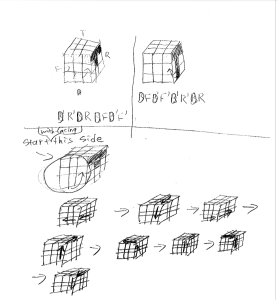
Now documents that’ve been taking up space and gathering dust are accessible and searchable on the computer (e.g., story ideas written on index cards, travel documents, how to solve a rubiks cube scribbled down 4 sheets of loose leaf).

rubikscube

Photo Credit: BlogHerAnnual

In March I had gone to see a taping of Conan on the Warner Bros lot. Colin Farrell was on the show, as was Jenna Elfman.

What sticks out most in my mind wasn’t Colin’s new movie trailer, or Jenna pantomiming a blowjob, but something I noticed afterwards, when the cameras finished rolling, and everyone rose from their seats, prepping for the mass exodus:

Conan O’Brien walks back to the set. A woman stands there waiting for him, probably a set PA. Without looking her in the eye or saying thank you, he hands her his microphone, then disappears behind the stage. The set PA disappears in the other direction.

It’s an innocuous thing, really. He wasn’t rude: he didn’t throw the mic at her, or like, spit on her or anything. But I believe the sum of our thousand innocuous actions throughout the day paint an accurate portrait of who we are and how we view the world:

  • Do you hold open doors for others?
  • Do you hold open doors for strangers?
  • Do you arrive on time?
  • Do you say “please?”
  • Do you say “thank you?”
  • Do you turn to the waiter when they greet you?
  • Do you greet them back or just start reciting your order?
  • Do you look them in the eye when you order or leave your face buried in the menu?
  • What about when you hand them the menu — do they deserve your attention then?
  • Or do you think none of that is necessary if you give them a 20% tip?
  • Do you know the names of your interns? Of your PA’s? Your assistants?
  • Do you thank them for their time?
  • For the scripts they cover and the unsolicited manuscripts they read?

Getting away with any of the above, without rebuke or reprimand, is a sign of higher status. In the dizzying rush to reach that status or level of success, it’s easy to say, “I’m going to emulate that behavior.” After all, people who’ve climbed to these levels reached it for good reason (not all, but many). It’s not hard to pick up bad habits.

There are stretches of days and weeks where I feel suffocated by these bad habits. Which is when I need to remember that I’ved worked for people who understand the concept of mutual respect. Gentlemen like Mark Teschner, who looks you in the eye when he shakes your hand, and remembers an actor’s name after a whirlwind casting session of 50 actors for one role.

I’m glad to read that even at the agencies, you still come across gentlemen like Sam Haskell, who Rob Carlson (partner at WME) described in THE MAILROOM by David Resin as “the best agent in that building”:

Because of his attitude and his personality, his ethics and his family values, he turned out to be probably the best agent in that building, and he did it by being different from everybody else. That was the biggest surprise for me: that you could be that great a person and still be amazing at your job. You didn’t have to be a jerk. You didn’t have to treat people like shit. You didn’t have to treat your assistants terribly. Every night Sam would walk out, and no matter how bad a day we’d had, or if I’d fucked up, he’d say, “Rob, thank you very much my friend. I appreciate it. Have a good night. I’ll see you tomorrow.” Every night.

There are times I wonder, “what is the point of this? What’s the point of listening and reading and writing about self-development?” Moments like the Conan-moment above remind me that for most of us, on a day-to-day basis, we can’t choose the people who surround us. We can’t always distance ourselves from their habits we’d like to avoid. But that isn’t our excuse for our own bad habits, because the behaviors we do want to emulate: good habits, mental frameworks, philosophies, strategies, and tactics — they’re never more than a click away.

Jim Rohn said, “You are the average of the five people you spend the most time with.” So spend time with the right people — even if you have to pipe their words directly into your brain, from a podcast, or a book.

Photo Credit: mrehan

I’d been writing a screenplay and used Ryan’s book as a reference. Then I saw that David Siteman Garland had interviewed Ryan a while back and immediately downloaded the audio.  The Rise to the Top Interview with Ryan Holiday covers Ryan’s book, TRUST ME, I’M LYING: CONFESSIONS OF A MEDIA MANIPULATOR (DSG’s affiliate link). I read the book when it first came out in July 2012) and watched Ryan speak at a signing at the Book Soup book store in West Hollywood.

Here’s the Interview

This interview serves as an excellent primer for Ryan’s book, which covers the techniques of the media strategist who’s worked with Tucker Max and American Apparel. For example, they talk about “moving up the chain” and that a blogger’s value comes from hitting quotas set for them. The book is marketed as a “how-to” in manipulating the media and defending yourself from manipulation, which I feel is a bit of a misrepresentation. The tactical analysis of Ryan’s methodologies aren’t very indepth, and I found a great deal of the latter half redundant.

This interview serves as an excellent primer for Ryan’s book, which covers the techniques of the media strategist who’s worked with Tucker Max and American Apparel. For example, they talk about “moving up the chain” and that a blogger’s value comes from hitting quotas set for them. The book is marketed as a “how-to” in manipulating the media and defending yourself from manipulation, which I feel is a bit of a misrepresentation. The tactical analysis of Ryan’s methodologies aren’t very indepth, and I found a great deal of the latter half redundant.

Nor is the interview (or book) something I’d prescribe as a “must listen to” in the self-development track.

However, if you’re interested in understanding the mechanics of blogging and how it’s changed today’s media, this is a worthwhile interview (and the book, a worthwhile read).

Ryan and David also shared a handful of nuggets about his work, which I’ve included below.

*I don’t guarantee these are word for word quotes. Consider them more like very accurate paraphrasing. Italics are my notes, bold is mine.*

07:30 – RH “I’m a big proponent of the vertically integrated model, that you don’t make a product, ship it, and then decide how you’re going to sell it. For me, how can I put things in the book that are going to make people talk about it. How can I create a cover that’s going to create a spectacle and generate attention. How can I reach out to my contacts and get a base going and gather momentum. For me, I saw this book as an opportunity to prove the things in this book.”

The vertical integration model Ryan discusses below is what Seth Godin has been saying for years — marketing isn’t what Mad Men. Marketing is the product.

09:23 – RH “I saw Tucker was working with other writers and authors, and I thought, ‘I’m not old enough yet, but I want to do that someday. I want to be one of those people. I decided I was going to meet Tucker, work with him, and learn from him. So I waited until I had my chance… I wrote an article about him, knowing that Tucker liked to post articles about him that he liked… We started a relationship from there, and as a 18-19 year old kid, I sent him every question that popped into my head.”

Ryan’s message here is that he used a Charlie Hoehn method to connect to Tucker Max. Ryan had a strategy that took in account what he wanted and how he was going to get it. It’s an example that demonstrates if you want something, you can get it — you’ll have to be intelligent, strategic, and genuine, but you can get it. (I realize I may have the causation mixed up, as Ryan probably contacted Tucker Max before Charlie worked for Ramit, but I’ve always thought of this as the Charlie Hoehn method, as publicized in his Recession Proof Graduate and Tim Ferriss’ post, 12 Lessons Learned While Marketing ‘The 4-Hour Body.”)

RH – “Dov Charney of American Apparel saw that all the money Nike was saving by using these child workers in Indonesia was going to endorsements and Lebron James and the New York Times stores. And he thought this was an inefficient model. Dov decided he wanted to pay his workers a fair wage, but he wouldn’t use these kind of endorsements. So the question became, how do we market this global brand on what is essentially a shoestring marketing budget?”

37:43 – DSG “The cover is badass.”

RH “I hate business book covers. I wanted an amazing book cover. The designer who did this is amazing. She did Tucker’s book covers, she read the book and loved it. She asked me if she could make the cover, and I told her ‘I would kill to have you do it.’”

The cover artist is Erin Tyler. She also designed many (most? all?) of the blogs on the now defunct Rudius Media websites. I interviewed her for a cover story on blogs-to-books when I was at Rutgers, and I remember her being very accessible and sweet. She used to blog at The Bunny Blog, and her design work can be found at Erin Tyler Design.

Photos Credit: timferriss

Going Paperless is a blog post series by SF writer Jamie Todd Rubin that documents his process for removing paper from his life.

More than changing how I think about using paper (which it has), it changed the way I think about organizing my work flow. I’ll detail how this took place for another post, but if you’re interested in getting started, here’s my favorite post: Tips On How I Use Evernote to Remember Everything

While it does offer some tactics, the two major insights into Jamie’s methodology about going paperless are:

  1. You do this because it can make your life more convenient and provides more time for what matters. If you feel it complicates your life, go back to what you were doing.

  2. Don’t feel overwhelmed by trying to do everything at once. Implement the tactics slowly. Make habits, don’t fall

  3. suspect to whims.

Photo Credit: Classic PDF

I finished Amarillo Slim’s memoir, In A World Full Of Fat People as my non-work related read. For work reads, the challenge is dealing with volume, so they require intense focus, and brute forcing my way through manuscripts and scripts. Basically, it sucks 80 percent of the joy from reading. Allocating time for non-work related reads is my way of saying, “I never want to not enjoy reading.” One hand washes the other.

Amarillo Slim IN A WORLD FULL OF FAT PEOPLE

I broke into this memoir because I love gambling and books on gambling. I didn’t read it with the idea of finding takeaways…

But I just couldn’t help myself.

There are major correlations between his anecdotes and self-dev (maybe not self-dev exactly, but bear with me, I’m about to drop some education on the practical application of Slim’s gambling philosophy):

Amarillo Slim was one of the world’s greatest proposition gamblers. He bet he could beat “Minnesota Fats at pool with a broom, Bobby Riggs at table tennis with a skillet, and Evel Knievel at golf with a carpenter’s hammer.” But Slim’s philosophy to be a winning gambler was simple:

“I never make a bet unless the bet is already won.”

Put another way, in Slim’s words:

“I learned that there are people who love action and others who love money. The first group is called suckers, and the second is called professional gamblers, and it was a cinch which one I wanted to be.”

What he’s talking about, is preparation.

Slim would practice with a skillet at table tennis for weeks before setting up his mark. When another mark wised up to the skillet gambit, he’d practice for months with a coke bottle to break him.

He’d master every pool hustle there was until he could do it with a broom. Blindfolded.

And Slim had patience: he would take his time laying the trap for a sucker, losing a little at a time until he was “ready to break the sonuvabitch.”

A full write-up to follow, but my major takeaway is self-dev is preparation. You’re preparing yourself, arming yourself with abilities to win the bet you place on yourself. These bets can take on many forms:

A negotiation next week.
An interview three months away.
Business decisions of tomorrow that’ll influence you for years to come.

Bets are won and loss in the preparation.

Photos Credit: pokerwire

I’m listening to David Siteman Garland’s interview with Jenny Blake of Life After College, on The Rise to the Top. I finished the interview yesterday, on my way home after my first visit to SoHo house. Which, by the way, I had zero idea on how to find the entrance to. #FirstWorldProblems.

The two major discussion points I found really interesting were:

1. The process of product development, from book deal to course creation.

2. Transition of a brand, as Jenny shifts her focus away from Life After College and into the next iteration of the Jenny Blake brand.

Full write up to come. In the meantime, here’s the link to watch (or if you’re a badass mofo like me, you can download the audio so you can listen while you get your swell on, and get ripped).*

*(There is zero correlation between listening to this podcast and getting ripped. Unless it’s a reverse correlation.)

Photo Credit: Swong95765

Time to get back to this. Yes.

I’m moving large chunks of the “Moving to Los Angeles” posts to another blog, one geared towards Los Angeles, the entertainment industry, and personal finance.

More on that another time.

Meanwhile, I’m making a shift that I’ve wanted to see for some time, to write about self-development: what I’m reading, watching, or listening to, in this vein. Self-dev has been a pretty constant influence in my life since college. It’s just not always easy to talk about.

There’s this connotation of weakness or embarrassment when I mention self-dev: the image of a sad, lonely man roaming the self-help section of the bookstore, or social misfits handing over loads of cash money to “gurus” to “improve themselves.”

This hang up stopped me from writing about it for a long time.

But I’m over it.

Photos Credit: Srividya Balayogi